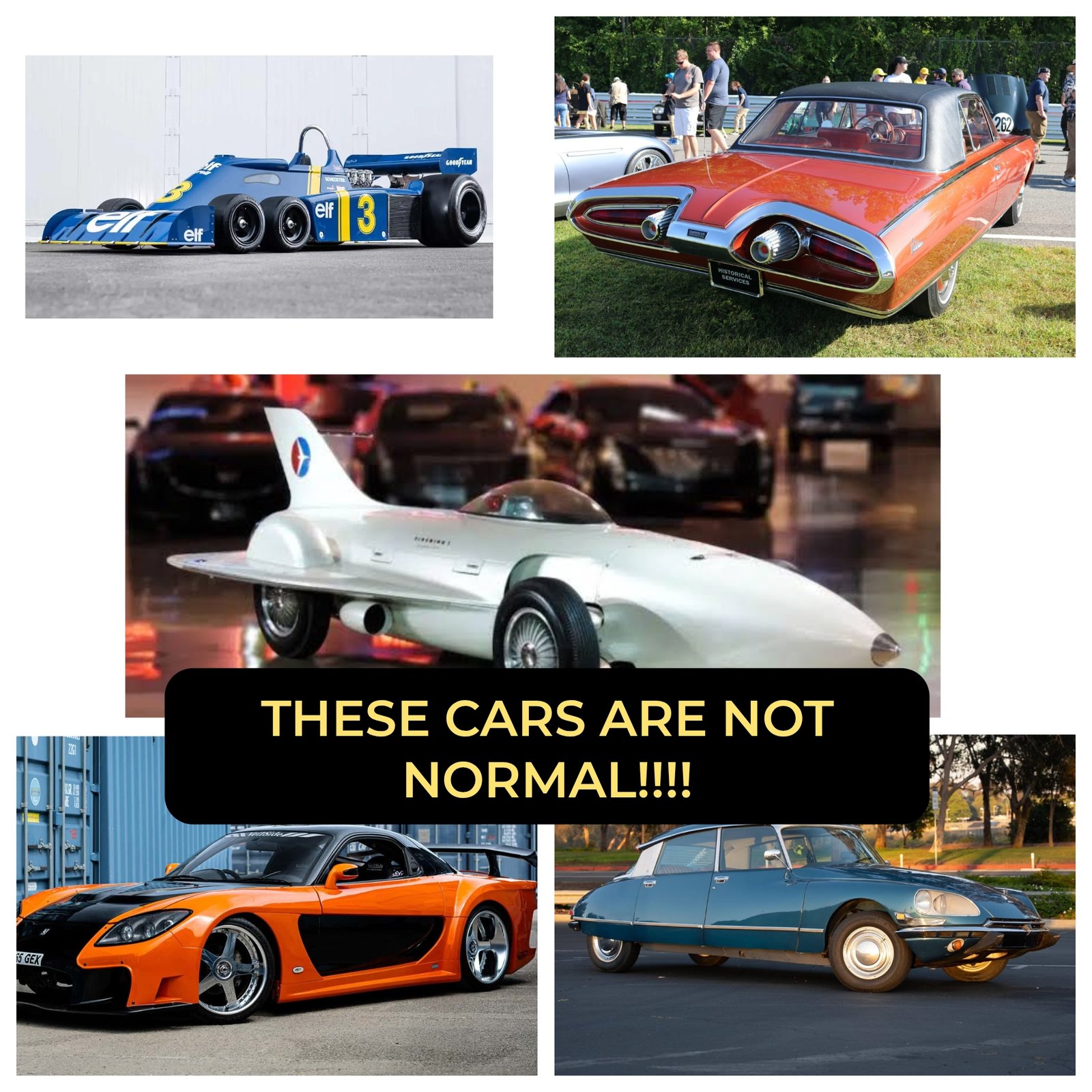
Some cars are designed to be practical. Others are designed to be fast.
And then there are cars that make you wonder what the engineers were thinking.
Over the decades, automakers have experimented with jet turbines, rotary engines, hydraulic suspension, unusual engine layouts and even six wheels. Most of these ideas never became mainstream—but some were so technically impressive that they changed the automotive industry.
Here are seven cars whose engineering sounds almost fictional.
7. Toyota Previa
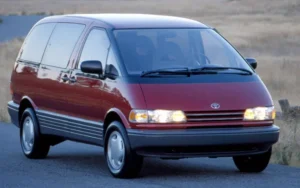
The Toyota Previa looks like an ordinary 1990s minivan.
It wasn’t.
Toyota placed the engine under the front seats, giving the Previa a mid-engine layout that was extremely unusual for a family vehicle.

The compact four-cylinder engine was mounted almost sideways beneath the cabin, allowing Toyota to create a surprisingly spacious interior without making the vehicle enormous.
The Previa was also available with features such as all-wheel drive and, in some markets, a supercharged engine.
Think about that for a second: Toyota essentially put a mid-engine powertrain into a family minivan.
It wasn’t designed to become a sports car. The unusual layout was primarily about packaging, balance and interior space.
But it demonstrates just how creative automotive engineers can become when they’re given a difficult packaging problem.
A minivan with its engine underneath the seats sounds crazy—until you realize Toyota actually sold it.
6. Mazda RX-7
Forget pistons.
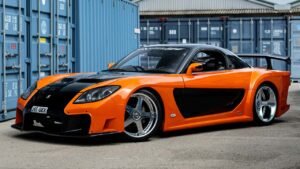
The Mazda RX-7’s defining feature was its Wankel rotary engine, which works fundamentally differently from the piston engines used in almost every other production car.
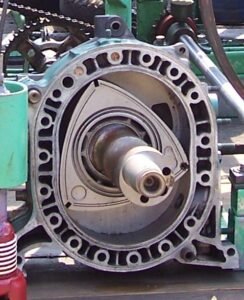
Instead of pistons traveling up and down inside cylinders, a triangular rotor spins inside a specially shaped housing.
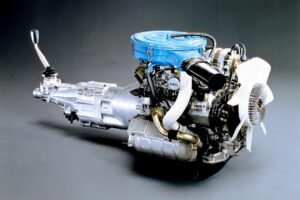
That allowed Mazda to build an engine that was:
- Extremely compact
- Relatively lightweight
- Capable of high RPM
- Smooth because of its rotating motion
- Capable of producing impressive power for its displacement
The third-generation RX-7 took the concept even further with a 1.3-liter twin-turbocharged rotary.
But the rotary engine came with significant disadvantages.
Fuel consumption, emissions, apex-seal wear and long-term durability were difficult problems to solve.
Eventually, Mazda stopped using the rotary as the primary engine in its mainstream sports cars.
But the RX-7 remains proof that there was once a serious alternative to the conventional piston engine.
5. Citroën DS
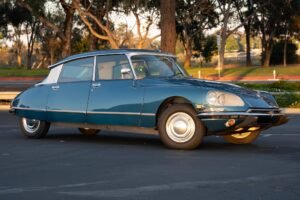
When the Citroën DS appeared in 1955, its exterior already looked futuristic.
The engineering underneath was even stranger.
Instead of conventional coil springs, the DS used hydropneumatic suspension.
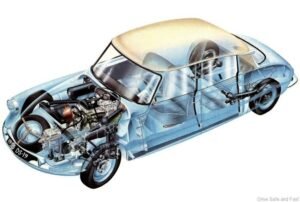
The system used hydraulic fluid and pressurized nitrogen to control the suspension and maintain the vehicle’s ride height.
That gave the DS capabilities that were remarkable for its era.
The suspension could compensate for changes in vehicle load, allowing the car to maintain a relatively consistent ride height even when carrying passengers and luggage.
The system also produced the exceptionally smooth ride for which the DS became famous.
Citroën didn’t simply make a comfortable suspension.
It essentially replaced the traditional spring-and-damper philosophy with an entirely different approach.
The technology was complicated, expensive and notoriously demanding to maintain.
But it worked.
And that is what makes the DS so fascinating.
4. Chrysler Turbine Car
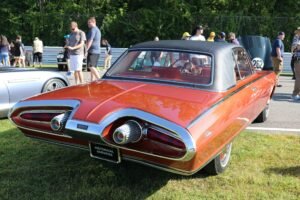
This sounds like something from a science-fiction movie.
It was real.
In the early 1960s, Chrysler built a road car powered by a gas turbine engine rather than a conventional piston engine.
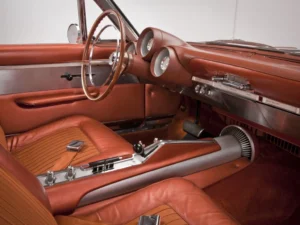
The Chrysler Turbine Car looked relatively normal from the outside.
Underneath the hood, however, was a turbine powerplant capable of operating on a surprisingly wide range of fuels.
Chrysler didn’t simply build a few prototypes and put them in a museum.
The company conducted a real-world consumer experiment.
A total of 203 drivers participated in the program, collectively putting more than a million miles on the turbine-powered cars.
The engine had some remarkable characteristics. It had very few moving parts compared with a piston engine and could operate on fuels ranging from gasoline to diesel and kerosene.
But the problems were equally serious.
Fuel economy wasn’t competitive, throttle response wasn’t ideal, emissions were difficult, and producing turbine engines economically was challenging.
The experiment ultimately went nowhere.
Still, Chrysler had managed to put something resembling a jet engine into a family car and hand the keys to ordinary Americans.
3. Porsche 959

The Porsche 959 is what happens when engineers are given permission to ignore the normal definition of a road car.
Introduced in the 1980s, the 959 incorporated technology that would eventually become common in high-performance vehicles.
Its engineering included:
- Twin turbocharging
- Sophisticated all-wheel drive
- Active suspension
- Advanced electronic engine management
- Anti-lock braking
- Lightweight construction
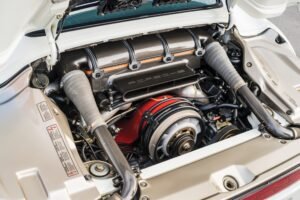
The all-wheel-drive system could vary torque distribution depending on driving conditions.
That was extraordinary technology for the period.
The 959 was developed largely around Porsche’s Group B ambitions, but its technology eventually demonstrated how electronics and sophisticated drivetrains could make enormous performance more usable on the road.
The car could approach 200 mph, depending on configuration.
Remember the era.
This wasn’t a modern supercar surrounded by computers and sensors.
This was an extremely advanced Porsche from the 1980s.
The 959 wasn’t merely fast.
It was effectively a rolling engineering experiment that previewed the technological direction of future performance cars.
2. Tyrrell P34
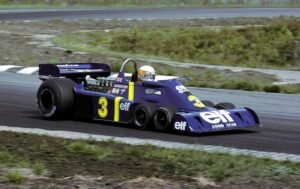
What if a Formula 1 car had six wheels?
In 1976, Tyrrell decided to find out.
The Tyrrell P34 used four small wheels at the front and two conventional-sized wheels at the rear.
The reason wasn’t simply to make the car look insane.
Tyrrell wanted to reduce the aerodynamic area exposed by the front tires while maintaining mechanical grip.
The tiny front wheels were partially hidden behind the car’s bodywork.
And amazingly, the concept wasn’t a complete failure.
The P34 won the 1976 Swedish Grand Prix, driven by Jody Scheckter.
It remains the only six-wheeled car to win a Formula 1 Grand Prix.
The concept eventually disappeared because the tiny front tires created their own engineering problems, including tire development and handling issues.
But for a brief period, one of the world’s most technologically advanced racing series featured a car that literally had six wheels.
1. General Motors Firebird XP-21
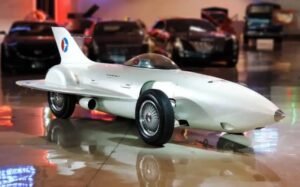
If you want the car on this list that looks like it escaped from a futuristic movie, this is it.
The GM Firebird XP-21 was unveiled in 1954 as an experimental gas-turbine-powered vehicle.
And unlike the Chrysler Turbine Car that came later, the Firebird was never intended to be a normal family vehicle.
It was essentially a jet-powered automotive laboratory.
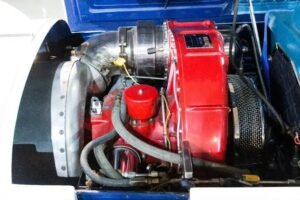
Its turbine engine produced enormous amounts of heat and noise, while the car’s design looked more like an aircraft than a conventional automobile.
The Firebird was part of General Motors’ exploration of what the automobile might become in the future.
The idea was incredibly ambitious.
Imagine being an American car buyer in 1954, walking into a dealership and seeing something that looked like a fighter jet sitting next to a Chevrolet.
The problem was that turbine technology wasn’t well suited to everyday driving.
A turbine could produce tremendous power, but fuel consumption, heat, noise, cost and throttle response made it impractical for normal passenger cars.
The Firebird therefore remained an experiment.
But visually and technically, it represents one of the boldest moments in American automotive engineering.
Why Did Most of These Ideas Fail?
The interesting thing about these cars is that most of their technologies weren’t necessarily bad ideas.
They simply weren’t the best solutions once real-world constraints were considered.
A technology has to survive more than an engineering test.
It has to survive:
Cost → reliability → regulations → manufacturing → fuel economy → maintenance → consumer demand.
That’s where many revolutionary automotive ideas collapsed.
A turbine engine might work beautifully in a laboratory, but that’s very different from asking millions of drivers to live with one.
A six-wheel Formula 1 car might offer an aerodynamic advantage, but only if the tire technology can support it.
A complicated hydraulic suspension system might deliver an incredible ride, but not if maintaining it becomes prohibitively expensive.
And a rotary engine might be beautifully compact, but that doesn’t matter if emissions and durability become impossible to manage.
The Strange Part About Automotive Innovation
Automotive history is full of ideas that initially looked ridiculous.
Some disappeared.
Others became normal.
Turbocharging was once exotic.
Electronic fuel injection was once advanced technology.
All-wheel drive was once primarily associated with specialized vehicles.
Hybrid powertrains were once considered unusual.
Today, many of these technologies are commonplace.
That’s why the strangest cars in history are worth studying.
They show us that automotive engineering doesn’t move in a straight line.
Sometimes an idea fails because it is fundamentally flawed.
Other times, it fails because the technology needed to make it practical simply doesn’t exist yet.
And occasionally, an idea disappears for decades before engineers rediscover it.
The next crazy car might already be here.
The biggest automotive breakthroughs don’t always begin with a completely new invention.
Sometimes they begin with a very old question:
“What if we did this completely differently?”
That’s the question that gave us rotary engines, turbine cars, hydraulic suspension and six-wheeled race cars.
And it’s probably the same question that will create the strangest cars of the future.